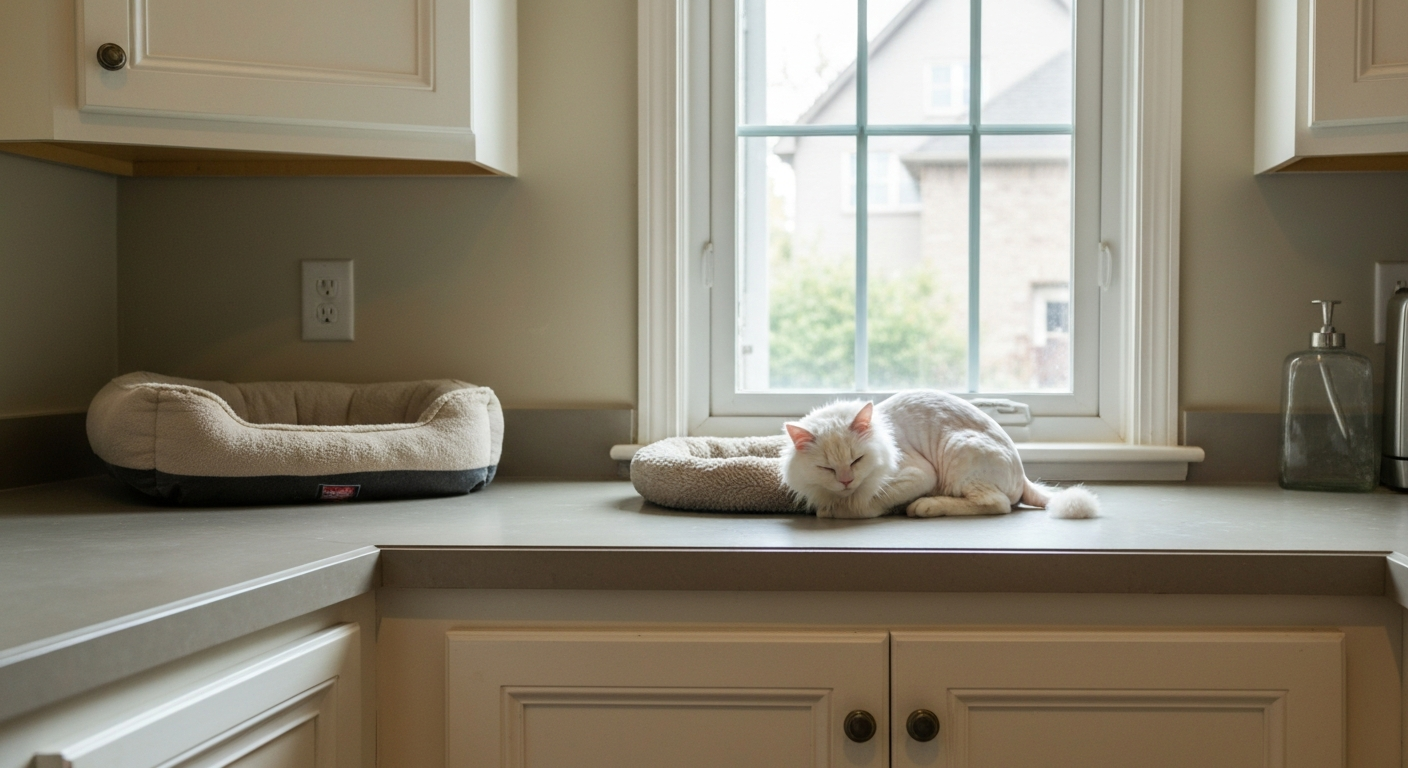
ESA Pet Deposits and Fees in Alabama: HUD Says No — Here's Why
Disclaimer: The information in this article is provided for general educational purposes only and does not constitute medical, mental-health, or legal advice. If you are facing a housing dispute, please consult an Alabama-licensed attorney or your local legal aid office. To determine whether an emotional support animal may be therapeutically appropriate for your situation, please speak with a licensed mental health professional.
You've found the apartment. You've submitted your application. You have a valid ESA letter from a licensed mental health professional. And then the email arrives: "There will be a $400 pet deposit and a $50 monthly pet fee for your emotional support animal." Your stomach drops — but it shouldn't. Under federal Fair Housing Act protections and HUD's authoritative guidance, this charge is almost certainly unlawful. Alabama tenants with a legitimate ESA letter are entitled to a specific set of housing rights that most landlords — and, frankly, many tenants — don't fully understand.
This guide walks you through exactly what the law says, what you are and are not entitled to, and the precise steps to take when a landlord in Alabama attempts to collect an ESA pet deposit, an ESA pet fee, or ongoing ESA pet rent.
The Legal Foundation: Why HUD Says No to ESA Pet Fees
The authority here is not ambiguous. The Fair Housing Act (42 U.S.C. §§ 3601–3619) requires housing providers to grant reasonable accommodations to individuals with disabilities — and that includes permitting an emotional support animal even in a no-pets building. The controlling federal guidance is HUD's FHEO-2020-01 notice, formally titled Assessing a Person's Request to Have an Animal as a Reasonable Accommodation Under the Fair Housing Act, issued January 28, 2020.
That notice states plainly: "Housing providers may not require applicants or residents to pay a fee or a security deposit as a condition of allowing the individual to keep an emotional support animal." The operative logic is straightforward. An ESA is not a pet in the legal sense. It is a disability-related accommodation — no different in principle than a landlord's obligation to install a grab bar for a wheelchair user. You do not pay a deposit for a grab bar. You do not pay monthly rent for a grab bar. The same principle applies to your ESA.
For deeper reading on HUD's FHEO-2020-01 guidance and how it applies to Alabama residents specifically, see our detailed breakdown at HUD's FHEO-2020-01 Guidance Explained for Alabama Residents.
What Alabama Law Adds to the Picture
Alabama does not have a separate state-level ESA statute that supersedes or expands upon the federal Fair Housing Act framework. Alabama Code § 21-7-1 et seq. governs service animals in the context of public accommodations — a distinct category from ESAs in private housing. In the housing context, the operative framework remains the federal FHA and HUD's implementing guidance. This means that Alabama landlords — whether they manage a single-family rental in Huntsville, a multifamily complex in Birmingham, or student housing in Tuscaloosa — are fully bound by the federal prohibition on ESA pet deposits and fees.
It also means that the type of housing matters. The FHA applies to the vast majority of rental housing in Alabama, but there are narrow exemptions: owner-occupied buildings with four or fewer units (the "Mrs. Murphy" exemption), and single-family homes sold or rented by the owner without a real estate agent, under certain conditions. If you rent from a large property management company, a corporate landlord, or any multi-unit complex, you are almost certainly covered.
What You Will Need Before You Begin
Before engaging your landlord on the fee issue, gather the following:
- A valid ESA letter issued by a licensed mental health professional (LMHP) who holds an active license in Alabama — typically a Licensed Clinical Social Worker (LCSW), Licensed Professional Counselor (LPC), Licensed Marriage and Family Therapist (LMFT), psychologist, or psychiatrist. The letter must be written on the clinician's professional letterhead, include their license number, and state that you have a disability-related need for an emotional support animal. If you need to obtain or renew your letter, start at Alabama ESA Housing Letter Under the FHA.
- Your lease agreement, including any pet addenda or fee schedules you were asked to sign.
- Written documentation of the fee request — an email, a lease clause, a property management portal notification, or a letter. Always get fee demands in writing before responding.
- A copy of HUD's FHEO-2020-01 notice, available free at HUD.gov. Having the actual document on hand lends authority to your response.
- Contact information for HUD's Office of Fair Housing and Equal Opportunity (FHEO) and, if needed, an Alabama-licensed attorney or Alabama legal aid organization.
Step-by-Step: How to Challenge an Unlawful ESA Pet Deposit or Fee in Alabama
Step 1: Confirm Your ESA Letter Is Legally Sound
Before citing federal law to your landlord, verify that your documentation will hold up to scrutiny. HUD's FHEO-2020-01 guidance permits housing providers to request reliable documentation when a disability or disability-related need for an accommodation is not obvious. A legitimate ESA letter must come from an LMHP licensed in Alabama, identify you as their client, reference a mental or emotional disability (without necessarily disclosing the specific diagnosis), state that the ESA is part of your treatment or therapeutic plan, include the clinician's license type and number, and bear a date within the past year. Letters purchased from online "ESA registries" or "certification databases" — which have no legal standing whatsoever, as HUD has explicitly noted — will not protect you and may actually undermine your credibility with the landlord.
Step 2: Submit a Formal Written Reasonable Accommodation Request
If you have not already done so, submit your ESA letter to the landlord or property manager as part of a formal Reasonable Accommodation Request under the Fair Housing Act. Address it to the landlord or property management company in writing (email with read receipt or certified mail creates a paper trail). State clearly that you are requesting a reasonable accommodation to keep an emotional support animal, cite the Fair Housing Act, and attach your ESA letter. At this stage, do not pay any pet deposit or sign any pet addendum — doing so may complicate your position later.
Step 3: Respond to the Fee Demand in Writing
When the landlord issues a pet deposit or pet fee demand, respond in writing promptly. Keep the tone professional and factual. A sample framework for your response:
"I am writing in response to your request for a pet deposit/pet fee regarding my emotional support animal. Under the Fair Housing Act, 42 U.S.C. § 3604(f)(3)(B), and HUD's FHEO-2020-01 guidance issued January 28, 2020, housing providers may not charge a pet deposit, pet fee, or pet rent as a condition of permitting a resident's emotional support animal. My ESA is a disability-related reasonable accommodation, not a pet under the FHA. I respectfully request that this fee be waived and that my reasonable accommodation request be processed in accordance with federal law. Please confirm receipt of this letter within ten business days."
Cite the specific HUD notice by name. Landlords and property managers who receive a citation to FHEO-2020-01 in writing — rather than a general complaint — often reconsider quickly, because documented awareness of a Fair Housing violation creates significant legal exposure for them.
Step 4: Know What the Landlord Can Still Do
Understanding the boundaries of your rights is just as important as asserting them. Under HUD's guidance, a landlord may still hold you financially responsible for any actual damage your ESA causes to the unit that exceeds normal wear and tear — charged against your standard security deposit, under the same terms applicable to all tenants. They may also deny the accommodation if your specific animal poses a direct threat to the health or safety of others, or if the accommodation would impose an undue financial or administrative burden (a high legal bar that rarely applies to a single ESA). What they may not do is impose a blanket pet deposit, a nonrefundable pet fee, or a monthly pet surcharge tied to the ESA's presence.
Step 5: File a HUD Complaint If the Landlord Refuses
If your written response is ignored or the landlord doubles down on the fee, you have several formal remedies available:
- File a complaint with HUD's FHEO online at hud.gov/program_offices/fair_housing_equal_opp/online-complaint or by calling 1-800-669-9777. HUD complaints are free, and HUD will investigate and may mediate on your behalf. The statute of limitations is one year from the discriminatory act.
- File a complaint with the Alabama Real Estate Commission (AREC) if the landlord is a licensed real estate professional. AREC has authority to discipline licensees who violate federal fair housing law.
- Consult an Alabama-licensed attorney, particularly one who practices fair housing or tenant's rights law. Successful FHA claimants may be entitled to actual damages, injunctive relief, and attorney's fees under 42 U.S.C. § 3613.
- Contact a legal aid organization such as the Legal Services Alabama (legalservicesalabama.org), which provides free or reduced-cost civil legal assistance to qualifying Alabama residents.
If your accommodation request has already been formally denied in writing, our step-by-step guide at What to Do If Your ESA Letter Is Denied in Alabama provides a detailed appeals roadmap.
Common Mistakes to Avoid
- Paying the fee "just to move things along." Once you pay, you have arguably accepted the charge. Your legal position weakens considerably, and recovering a paid deposit is harder than refusing it upfront.
- Relying on an ESA registry certificate or ID card. Online registries are not recognized under the FHA. HUD has explicitly stated they carry no legal weight. Presenting one instead of a proper LMHP letter may cause the landlord to question your entire accommodation request.
- Making only verbal complaints. In any potential Fair Housing dispute, the paper trail is everything. Every request, every refusal, every fee demand should be exchanged in writing and preserved.
- Missing the one-year filing window. HUD complaints must be filed within one year of the discriminatory act. If a landlord charged you an unlawful ESA fee months ago and you are only now learning of your rights, act promptly.
- Assuming the exemptions don't apply. If you rent from an individual owner who occupies one unit of a four-unit or smaller building, the FHA exemption may apply. Check with an Alabama-licensed attorney before assuming full FHA coverage.
What a Successful Outcome Looks Like
When this process is handled correctly — with a clinician-issued ESA letter, a formal written accommodation request, and a clear citation to HUD's FHEO-2020-01 guidance — many Alabama tenants find that their landlord waives the fee without escalation. Property managers who understand the FHA's scope recognize that charging an ESA pet deposit in Alabama or imposing ESA pet rent exposes them to a federal fair housing complaint, potential civil damages, and reputational harm. Most prefer a quiet resolution.
For those cases that do require escalation, HUD's complaint process has resulted in landlords being required to return improperly collected fees, revise their pet-fee policies across entire properties, and in some cases pay compensatory damages to the affected tenant. A licensed mental health professional may determine that an emotional support animal is therapeutically appropriate for your situation — and the federal law is designed to ensure that determination is honored in housing, without a financial penalty attached to your disability accommodation.
Final Thoughts
The prohibition on ESA pet fees in Alabama is not a technicality or a loophole — it is a civil rights protection rooted in the Fair Housing Act and reinforced by HUD's most comprehensive ESA guidance to date. Your first step is always a valid letter from a licensed Alabama clinician. Your second step is knowing your rights well enough to assert them calmly, in writing, with the correct federal citations. If your landlord pushes back, HUD's complaint process and Alabama's legal aid resources exist precisely for situations like yours.
This article is for informational purposes only and does not constitute legal, medical, or mental-health advice. For housing disputes, consult an Alabama-licensed attorney or contact Legal Services Alabama. To explore whether an ESA letter may be appropriate for your mental health needs, speak with a licensed mental health professional in Alabama.
Ready to start your Alabama ESA letter?
Licensed Alabama clinician review. Compliant with state law.
Get My Alabama ESA Letter